Mystery Structure
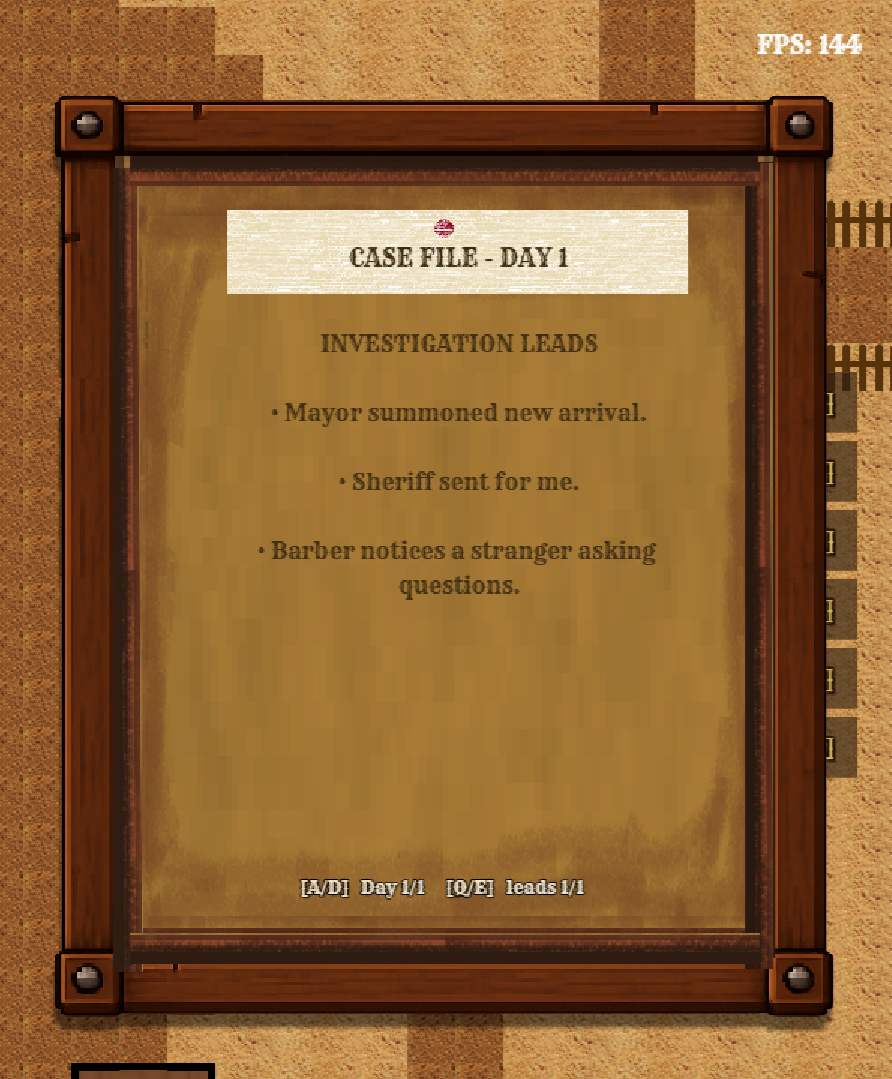
The story was built around a 7-day investigation format. Each day introduces new leads, character behaviour, evidence, or contradictions, allowing suspicion to build gradually.

A western murder mystery built around branching dialogue, journal-led deduction, environmental storytelling, and player suspicion.
A Week in the West is a browser-based narrative mystery game set in the isolated western town of Deadwood. The player investigates the death of the Sheriff by speaking to townspeople, collecting evidence, tracking leads, and deciding who they believe is responsible.
The game was designed as a slower-paced detective experience rather than an action game. The focus was on suspicion, unreliable information, atmosphere, and letting the player build their own interpretation of the case.
The story was built around a 7-day investigation format. Each day introduces new leads, character behaviour, evidence, or contradictions, allowing suspicion to build gradually.
Each character was designed to feel useful but incomplete. NPCs rarely give the full truth, so the player has to read between the lines and compare statements against evidence.
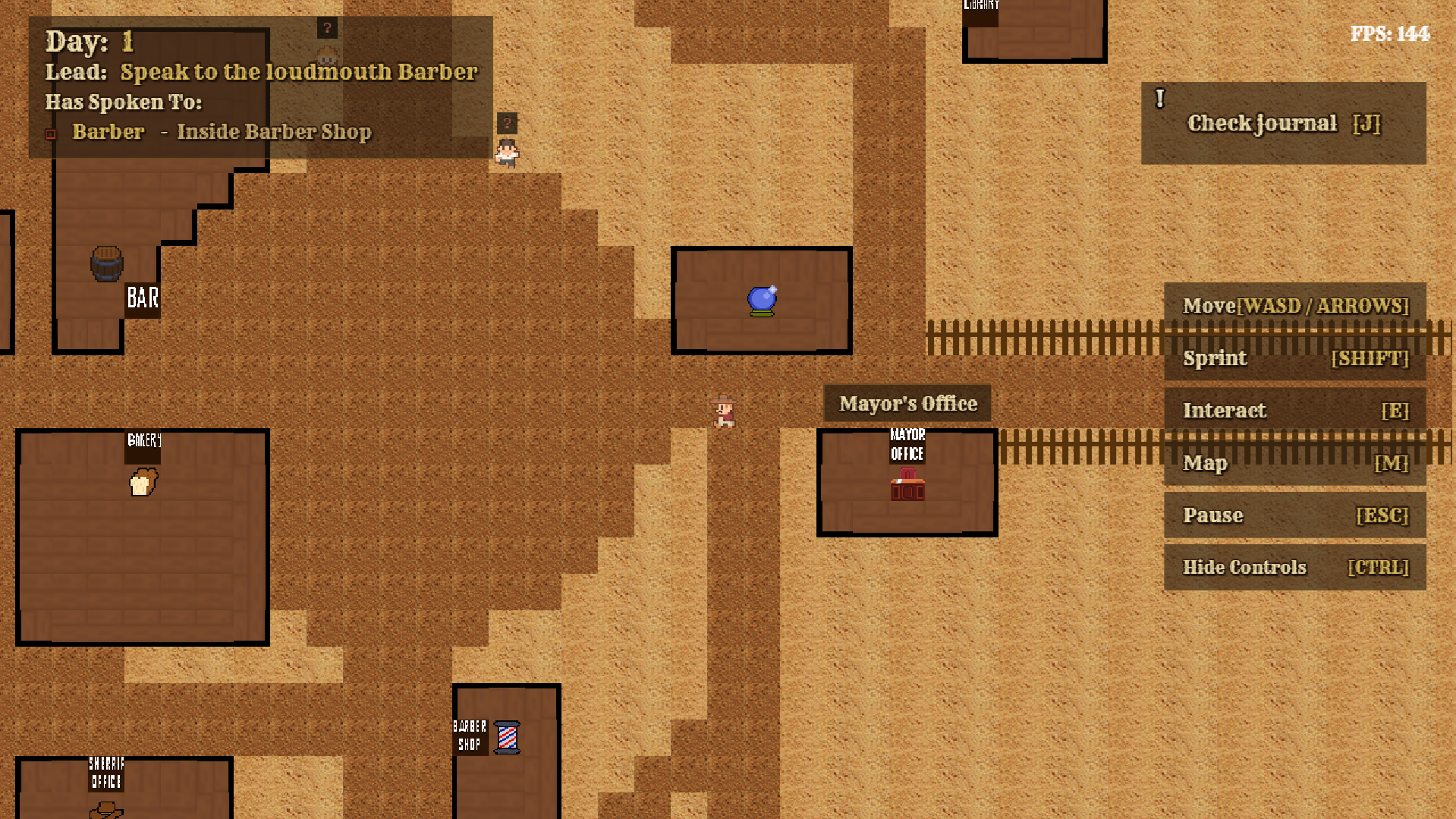
Deadwood was designed as a small, isolated town where reputation, gossip, and mistrust matter. Locations such as the saloon, church, sheriff’s office, barber shop, and library helped ground the western setting.
The game follows a structured investigation, but player choice still affects how information is discovered and understood. Dialogue branches, optional evidence, suspect notes, and the final accusation system all support the feeling of deduction.
The final accusation was designed as the main consequence of the investigation. Instead of simply telling the player the answer, the game asks them to use their journal, gathered evidence, and suspect notes to decide who they believe is guilty.
The project moved away from an early comedic western style and toward a more grounded pixel-art direction. This better supported the darker mystery tone and made the world feel more believable.
Building interiors were used to reinforce the western setting and give characters a stronger sense of place. Spaces such as the saloon, bank, church, and sheriff’s office helped tell the story visually.
Audio was kept minimal so the town felt quiet and tense. Footsteps, building transitions, journal sounds, and occasional music helped make actions feel more deliberate without overcrowding the atmosphere.
A mystery can become confusing quickly if information is not organised. The day system, journal, and summaries helped keep the investigation readable.
Character placement, building layout, and environmental details can communicate relationships and suspicion without relying only on dialogue.
The early comedic style did not fully fit the murder mystery premise. Moving toward a grittier western tone made the story feel more consistent.